OEM/ODM Outdoor Products Partner | China + Vietnam Production
- All
- Product Name
- Product Keyword
- Product Model
- Product Summary
- Product Description
- Multi Field Search


Views: 220 Author: svegaoutdoor Publish Time: 2025-08-04 Origin: Site


Content Menu
● Understanding Your Hunting Fixed Blade Knife
>> What is a Fixed Blade Knife?
>> Know Your Knife's Design and Purpose
>> Maintain a Firm and Correct Grip
>> Use a Stable Cutting Surface
>> Avoid Forceful or Jerky Movements
● Carrying Your Fixed Blade Knife Safely
>> Positioning the Sheath for Convenient but Safe Access
>> Avoid Carrying Multiple Knives Unnecessarily
● Knife Maintenance for Safety
>> Regular Cleaning and Drying
● Safety Precautions During Use
>> Don't Use the Knife for Non-Intended Tasks
>> Handle Wildlife and Game Responsibly
● Emergency Preparedness and First Aid
>> Know Basic First Aid for Knife Injuries
>> Carry a Communication Device
● Legal and Ethical Considerations
>> Be Aware of Local Knife Laws
>> Respect Wildlife and the Environment
>> 1. How often should I sharpen my fixed blade hunting knife?
>> 2. What is the best way to carry a fixed blade knife on a hunting trip?
>> 3. Can I use a fixed blade knife for camp chores like chopping wood?
>> 4. What should I do if I cut myself with my hunting knife?
>> 5. Are there specific safety tips when skinning game?
For any outdoorsman, a hunting fixed blade knife is an essential tool, whether for preparing game, building shelter, or general camp tasks. However, its utility comes with inherent risks if safety practices are neglected. Understanding how to use, carry, and maintain a fixed blade hunting knife safely can prevent injuries and ensure a successful outdoor experience. This comprehensive guide will cover all critical safety tips that every hunting enthusiast should know, ranging from proper handling to legal considerations.
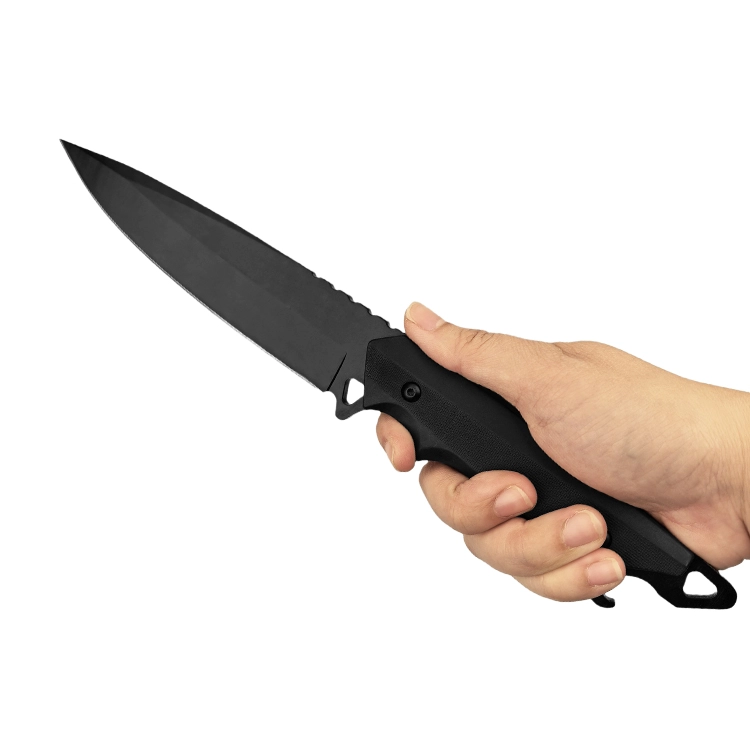
A fixed blade knife has a blade that does not fold or slide. Instead, the blade is rigidly fixed into the handle, providing a stronger and more durable cutting edge compared to folding knives. This sturdiness makes fixed blade knives ideal for heavy-duty outdoor tasks such as skinning, cutting ropes, and woodworking.
Different fixed blade knives vary by blade shape, size, and intended use. For example, skinning knives have a curved blade for efficiently separating hide from meat, while drop point blades offer versatility for general outdoor tasks. Familiarize yourself with your knife's design to use it effectively and safely. Misusing a knife for purposes it's not designed for increases the chance of accidents.
Always grip the knife handle firmly with all four fingers wrapped around and the thumb resting on top or along the spine. This grip provides control and prevents slips, especially during vigorous cutting or skinning tasks. Avoid a loose or awkward grip that can cause the knife to twist unexpectedly.
Always direct cutting motions away from yourself and others around you. Cutting towards your body or hands is a common cause of injury. When skinning game, carve in small controlled strokes moving outward, keeping your free hand clear of the blade's path.
Whenever possible, place your work on a stable surface such as a cutting board or flat rock, rather than holding items in your hand. This reduces imbalance and helps you maintain safer cutting angles.
Use deliberate and controlled cuts rather than rapid or violent chopping. Applying excessive force or quick slashes increases the risk of losing control and getting cut.
A sharp blade is safer than a dull one. Dull knives require more force, increasing the chance of slips. Regularly sharpen your knife using an appropriate sharpener to maintain a keen edge for precise cuts.
A well-fitted sheath is crucial for protecting both the blade and yourself. The sheath should securely hold the knife to prevent accidental loss or blade exposure. Always keep your knife sheathed when not in use.
Carry your sheath in a position that balances accessibility and safety, such as attached to your belt or pack where it won't catch on branches or gear. Avoid loose positioning that risks the knife falling out or accidentally drawing when moving.
Limiting yourself to one well-maintained fixed blade knife reduces risks of confusion or accidents involving multiple blades. Carrying multiple knives increases the chance of improper handling.
After each use, clean your knife blade with warm soapy water to remove blood, dirt, and sap. Dry thoroughly to prevent rust, which can weaken the blade and create sharp edges that bite unexpectedly.
Apply a light coat of oil on the blade and any metal parts to protect against corrosion, keep the surface smooth, and ensure consistent performance.
Before each use, check the blade and handle for chips, cracks, or looseness. A compromised knife can fail unexpectedly, causing injury.
Ensure people and pets maintain a safe distance when you use your knife. Distractions or crowding can result in accidents.
Avoid using your knife as a screwdriver, pry bar, or hammer. Using the blade for such tasks is unsafe and may damage the knife.
Never use the knife to provoke or scare animals. For personal protection, carry deterrents like bear spray instead of relying on knives.
Focus completely when using your fixed blade knife. Talking, moving abruptly, or multitasking can lead to accidents.
Learn how to treat cuts and puncture wounds promptly. Carry a basic first aid kit that includes bandages, antiseptics, and gloves. Immediate attention to injuries can prevent infection.
In case of severe injury, having a means to call for help, such as a cell phone or satellite messenger, is vital in wilderness settings.
Different regions have regulations on blade length, carrying methods, and public display of knives. Always check local laws before venturing into any area to ensure compliance.
Use your knife responsibly to minimize harm. Practice ethical hunting and follow sustainable harvesting principles.
You should sharpen your knife regularly, ideally before each hunting trip, and more often if you notice it becoming dull. A sharp knife is safer and more effective.
Carry your knife securely in a well-fitting sheath attached to your belt or pack in a position that is accessible but prevents accidental exposure or loss.
Yes, fixed blade knives are strong and versatile, but avoid using them as a substitute for an axe. Use chopping techniques carefully to prevent damage and injury.
Stop the activity, apply pressure to stop bleeding, clean the wound with clean water or antiseptic, bandage it properly, and seek medical attention if the cut is deep or does not stop bleeding.
Keep the blade pointed away from your body and other people, make slow controlled cuts, keep your non-cutting hand safely away, and use a stable surface when possible.

[1] https://ruikeknives.com/safety-tips-for-using-your-hiking-knife-in-the-wilderness/
[2] https://www.shokuninusa.com/zh-hk/blogs/news/mastering-outdoor-skills-folding-knives
[3] https://perkinknives.com/en-us/blogs/knives/hunting-knife-safety-tips-for-uk-wilderness-adventures
[4] https://www.youtube.com/watch?v=15KkwZHGlv8
[5] https://crateclub.com/blogs/loadout/how-to-carry-a-fixed-blade-knife-essential-tips-for-tactical-readiness
[6] https://patents.google.com/patent/CN112638601A/zh
[7] https://www.knivesandtools.com/en/ct/how-do-you-safely-use-an-outdoor-knife.htm
[8] https://patents.google.com/patent/CN2514978Y/zh
[9] https://eknives.com/blog/six-essential-safety-tips-fixed-blade-knives
[10] https://www.163.com/dy/article/EJVA89SB05444SR1.html
Hot Tags: China, Global, OEM, private label, manufacturers, factory, suppliers, manufacturing company


